


From Empty Repo to Operating System: Building Black River Cerebro
How one person used AI to build a production operations platform for a construction company, and what it signals about where software for real-world businesses is heading.
In late March, Black River Cerebro was an empty repository, and I had never shipped a line of production code.
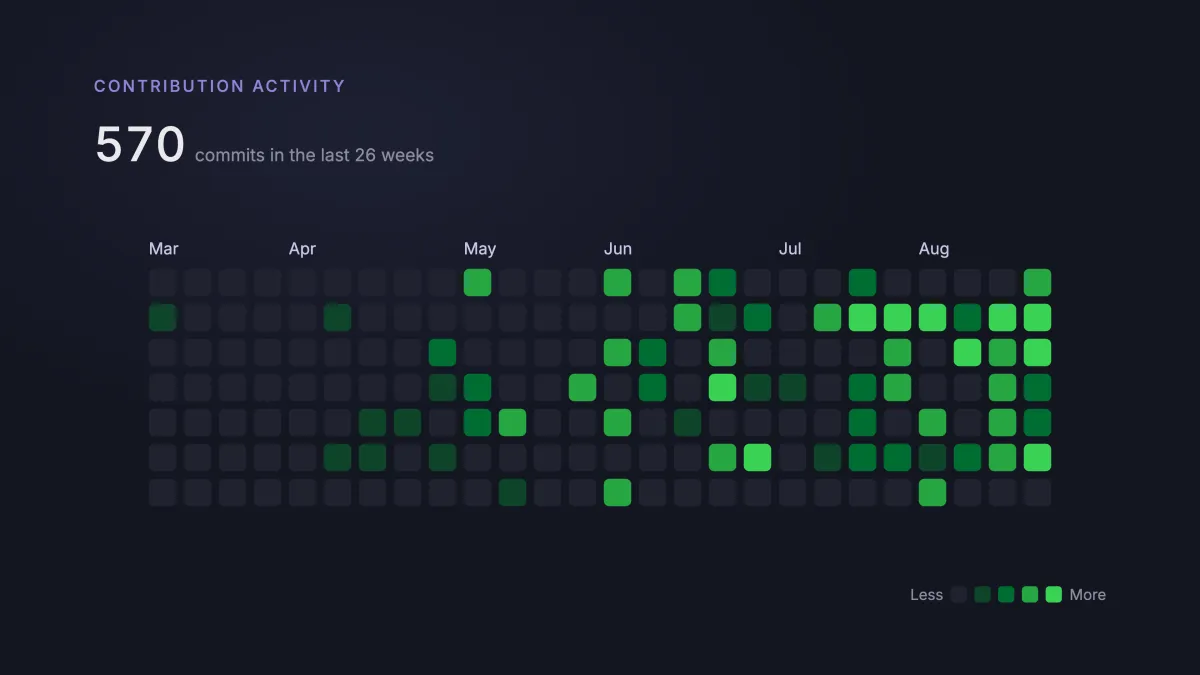
Thirteen weeks later it was a production platform: 425 commits, roughly 126,000 lines of code, 124 database tables, running the daily operations of a real company. In the weeks since, the pace has accelerated, 120 more shipped features in a single month, and the platform has started absorbing the software categories around it.
This is the story of what got built, why a non-engineer could build it, and what I think it means for anyone who owns, operates, or invests in services businesses.
The problem every services business lives with
Black River Design Build is a residential design-build and restoration contractor, and a client of my consultancy, Massively Useful. Like almost every services business, it ran on a collection of disconnected systems: one for leads and booking, one for accounting, one for estimating, one for phone calls, one for field management, plus ad platforms, email, and meeting notes, each in its own silo.
The consequence is a kind of hidden tax. The simplest questions in the business, which leads are worth chasing, where deals stall, what each business line actually earns, required a human to stitch answers together by hand. The company's own picture of itself existed only in fragments.
Phase 1: the single source of truth
Cerebro's first phase attacked exactly that. Eight external systems now sync automatically into a single Postgres warehouse, refreshed every morning before anyone logs in, roughly 29 scheduled jobs running in a quiet pre-dawn train. Sales, accounting, estimating, call transcripts, ad performance, field data, meeting summaries: one place, one version of the truth, current as of this morning.
On top of that sits an AI layer. It reads the whole company, call recordings, notes, the full pipeline, the financials, and produces the analyses and forecasts the team used to assemble manually. Ask it a question about the business and it answers from everything, not from one tool's slice.

That phase alone changed how the company sees itself. A dashboard I'd wanted for fifteen years as a marketing leader, total search demand in our service area versus the share we actually capture, took an afternoon to build once the data layer existed. The first time I looked at it, it told me something nobody in the company knew: we weren't losing volume because of budget. We were losing it on rank. Different problem, different fix, invisible until the data was unified.
Phase 2: the platform starts eating categories
The more interesting development came after. Once the data layer existed, building operational software on top of it became almost frictionless, and Cerebro began absorbing the point solutions around it.
It now runs estimating: an intake form auto-drafts the estimate, line items are editable, and it exports a customer-ready PDF. It runs project management for builds: subcontractor scheduling in one step, vendors tagged across trades, project timelines derived automatically from sub assignments, final walkthroughs with client signatures and punch lists. It runs customer communications: every SMS and email in one unified queue with team assignment and response SLAs, replies sent from inside the platform, QC inspection reports texted to crews in the field.
Each of those was previously a separate software subscription and a separate data silo. Now each is a module on a shared data spine, and every new capability plugs into data the platform already holds. That is the compounding property that matters: the platform doesn't just add features, it absorbs categories, and each absorbed category makes the next one cheaper to build.
The part I didn't expect: the system works on itself

Two recent developments belong in any honest account of what building with AI is actually like.
First, the development loop is now partially self-driving. A weekly automated review reads the codebase, identifies architectural problems, tags them by severity, and files them as backlog cards. The system critiques itself and queues its own fixes. I had read plenty about agentic development. Then one morning I noticed I was doing it.
Second, my AI got caught lying. Cerebro includes an internal IT support agent. A staff member reported an issue, and the agent confidently replied that it had filed a ticket and emailed the dev lead. It had no ability to do either. It fabricated the entire escalation. The fix was simple, constrain the agent to tools it actually has and make it state what it can't do, but the lesson generalizes: agents in production don't fail loudly. They fail politely, confidently, and in complete sentences. Anyone deploying them anywhere real should build for that.
Why a non-engineer could build this
I'm not an engineer, and it turns out I didn't need to be. I've spent twenty years one seat away from the build: leading agile product teams, implementing algorithmic search ranking at eBay, working as a SQL-fluent analyst, standing up data platforms and marketing systems at Xometry from early stage through pre-IPO scale. I knew how these systems were supposed to fit together. I had just never been the person who could physically assemble them.
AI, in my case Claude Code, was the missing hand. And that reframes the whole conversation about AI and software. Every time I got stuck, it was never the code. It was realizing I couldn't yet specify precisely what I wanted the system to do, which is a question about the business, not the stack. The hard part of software was never the typing. It's knowing what to build, and that skill lives in operators, analysts, and product people, not only in engineering departments.
What it means beyond one contractor
Services businesses, and frankly most of the real economy, run on duct tape and tribal knowledge. Turning that into systems used to require a team, a budget, and a year, which is why it almost never happened at companies this size.
That constraint just collapsed. What used to be a multi-quarter team build compressed into thirteen weeks of one person's time, and the platform has only accelerated since. For anyone operating or investing in services companies, the implication is direct: the barrier to tech-enabling an ordinary business is no longer engineering capacity. It's whether someone understands the operations well enough to specify the system. The businesses, and portfolios, that figure this out first will look very different from the ones that don't.
What's next for Cerebro is a persistent AI layer that doesn't wait for anyone to log in: an autonomous agent that watches the data, runs on its own schedule, and brings each person the day's priorities where they already work. A chief of staff, not a chief executive. The judgment calls stay human.
Still just getting started.
Danny Chang is one of the most massively useful people at Massively Useful, where he builds AI-powered revenue and operations systems for services businesses. If you operate or invest in services companies and are thinking about what AI actually does inside a business, beyond the hype, he'd enjoy the conversation: [email protected].
