

The Most Useful Thing We Built for a Contractor Wasn't a Dashboard. It Was a Chat Box.
Hi folks. I want to share something that surprised me, because it changed how I think about what we are actually building for these businesses.
We spent a good while building a real data layer for Black River Design and Build, the Wisconsin remodeler we work with. The whole thing. A warehouse that pulls their CRM, their accounting, their estimating, and their ad data into one place. A semantic layer so every metric has one agreed definition. Dashboards on top. It is a genuinely nice piece of infrastructure and I was proud of the dashboards.
The dashboards are not the part that stuck.
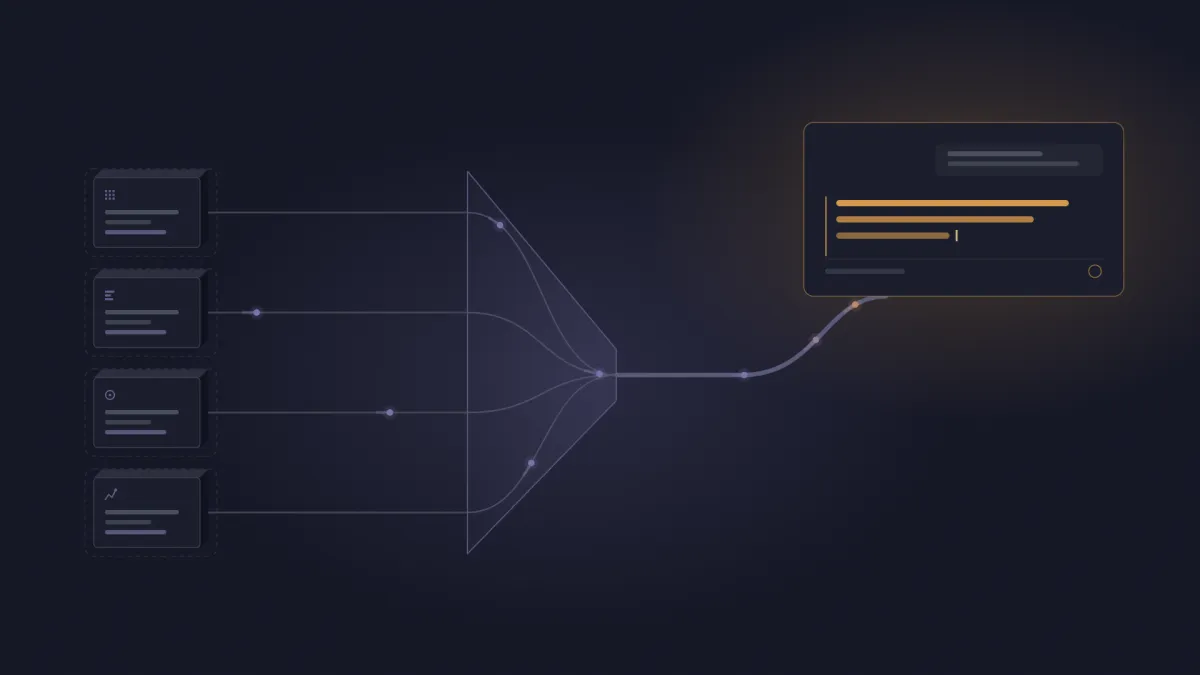
The part that stuck, the thing Brian, their CFO, kept reaching for, was the plainest-looking piece of the whole build. A chat box. A place where you can type a question about the business in ordinary English, "what was our close rate on referral leads last quarter versus paid," and get an answer back from your own data, in seconds, without knowing where any of it lives or how to write a report.
I did not expect that to be the headline. I expected the dashboards to be the headline. I was wrong, and the reason I was wrong is worth unpacking, because it says something about what "AI for a small business" actually means once you get past the hype.
Most owners cannot answer basic questions about their own business
Start with the problem it solves, because it is bigger and more common than it sounds.
Ask a typical contractor a specific question about their business, which trade is most profitable, which lead source produces customers who actually pay on time, what a repeat customer is worth versus a first-timer, and most cannot tell you. Not because they are not smart, and not because the data does not exist. It is because the answer lives spread across four systems that were never designed to talk to each other. The CRM knows one piece, accounting knows another, the ad platform a third, and stitching them together is a manual project nobody has time for.
The numbers back this up. In survey data, 58% of small business owners say their main analytics obstacle is "too many tools, can't figure out the data," and only about 37% review their performance metrics even weekly. That is not a discipline problem. It is an access problem. When getting an answer means an afternoon of exports and spreadsheets, you stop asking, and you start running the business on gut. Which is fine right up until the month gut is wrong.
Why a dashboard alone does not fix it
Here is the thing I had to learn the hard way, and it is the reason the chat box beat the dashboards.
A dashboard answers the questions you knew to ask when you built it. That is genuinely useful, and every business should have one for its core numbers. But the questions that actually drive decisions are usually the ones you think of that morning, prompted by something specific. A slow week. A weird invoice. A gut feeling about a certain kind of job. Those questions do not live on the dashboard, because you did not know to put them there. And the old answer to "can we see that" was "give me a few days," which in practice means the question never gets answered and the decision gets made on instinct.
The chat box collapses that. The question you think of at 7am gets an answer at 7:01, from your real numbers. It turns the business from something you look at into something you can interrogate. That is a different relationship with your own company, and it is the part Brian felt immediately, because he is the one who has always had those questions and never had a fast way to answer them.
The unglamorous truth underneath the magic
Now let me undercut my own headline, because I do not want anyone to take the wrong lesson.
The chat box is not the impressive part. The chat box is the easy part. Anyone can put a chat interface on top of a database in an afternoon, and plenty of people are selling exactly that. The thing that makes it actually work, the thing that took the real time, is everything underneath it: the warehouse that unifies the sources, and especially the semantic layer, the single agreed definition of what "close rate" and "gross margin" and "customer" even mean for this specific business. Without that, a chat box will happily give you a confident answer built on the wrong join, and a confident wrong answer is worse than no answer at all.
So the magic trick is real, but it is a magic trick sitting on top of a lot of unglamorous plumbing. The reason most contractors cannot just ask their business a question is not that they are missing a chat box. It is that they are missing the one source of truth the chat box would need to be right. Build that first. The natural-language part is the bow on top, not the gift.
This is the whole thesis we have been circling in the data-layer and CRM posts, made concrete. For years, the ability to ask your own business questions in plain English was something only companies with a data team and a six-figure analytics stack could afford. The reason we could build it for a single remodeler is that the cost of the underlying plumbing collapsed, and the language layer on top got good enough to trust, both in the same eighteen months. That is genuinely new. It is not a bigger version of an old thing. It is a capability that simply was not available to a business this size a couple of years ago.
What this actually is
If you are an operator or you run one of these businesses, here is the way I would put it. "AI for a small business" is not a chatbot bolted onto your website. The version that changes anything is quieter and more useful than that: it is your own business, finally assembled into one place, made answerable in the language you already think in.
Credit to Brian and the Black River team for pushing on it, asking it hard questions, and telling us when the answers looked off, which is how the definitions underneath got sharp enough to trust. That back-and-forth was the actual work.
I am still a little surprised the chat box beat the dashboards. But every time I watch an owner ask their business a question they have wondered about for years and get the answer before their coffee is cold, I get it again. If you have built something like this, or you have wanted to, I would love to compare notes. And if you think the dashboards should have won, tell me why. I am genuinely still chewing on it.
If you want to get to the point where you can just ask your business a question and trust the answer, start with a Revenue Audit at massivelyuseful.ai.
